System compromise is not automatically success.
Compromise of a server, database, privileged account, application, or individual component matters only if it enables Unauthorized Reconstruction.
SENDĀTRIX invites qualified security professionals to independently examine whether C Chains™ can continue protecting Protected Information after administrative compromise.

Traditional architectures frequently allow the authority used to administer systems to become practical authority to recover sensitive information. Structural Protection deliberately separates those responsibilities.
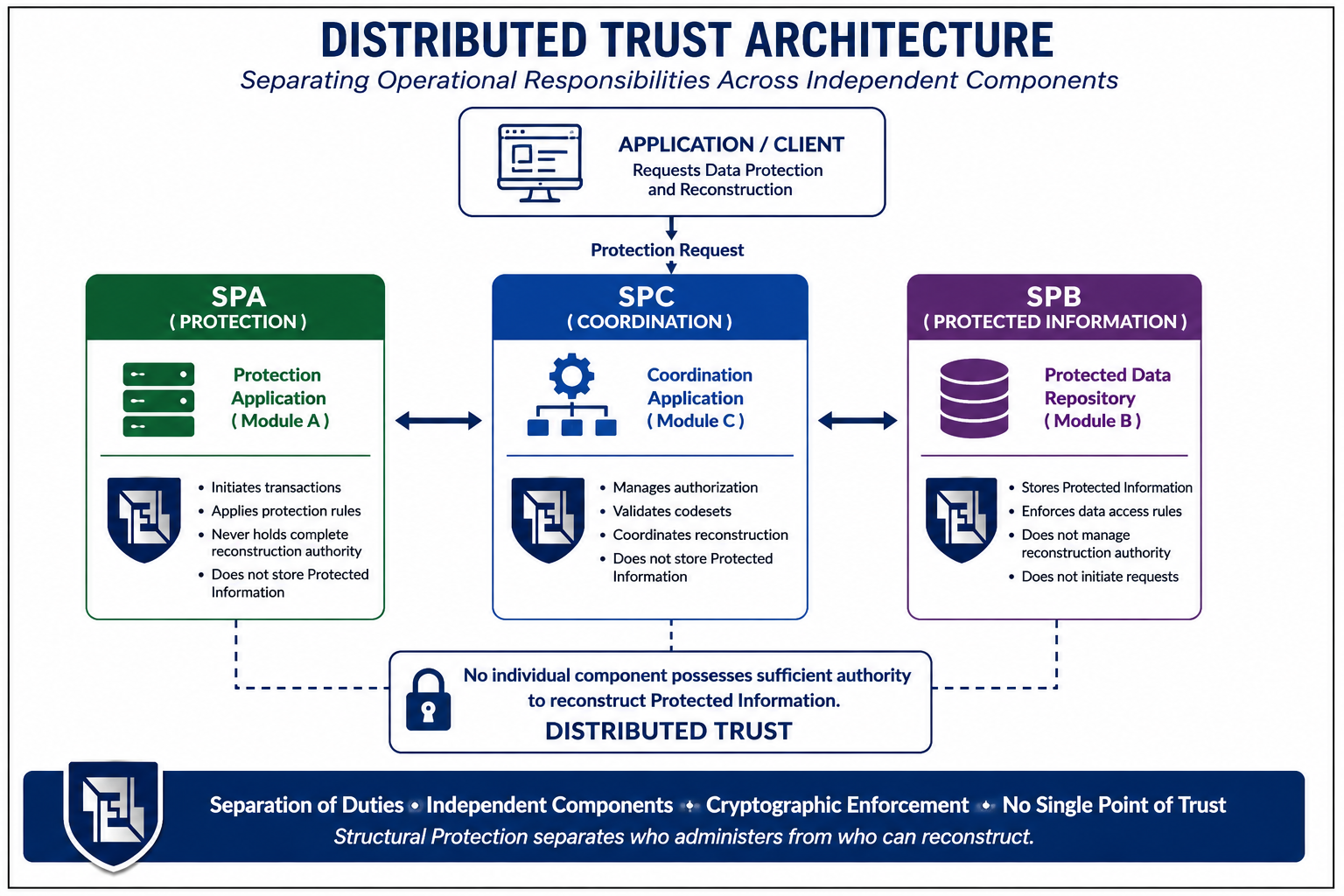
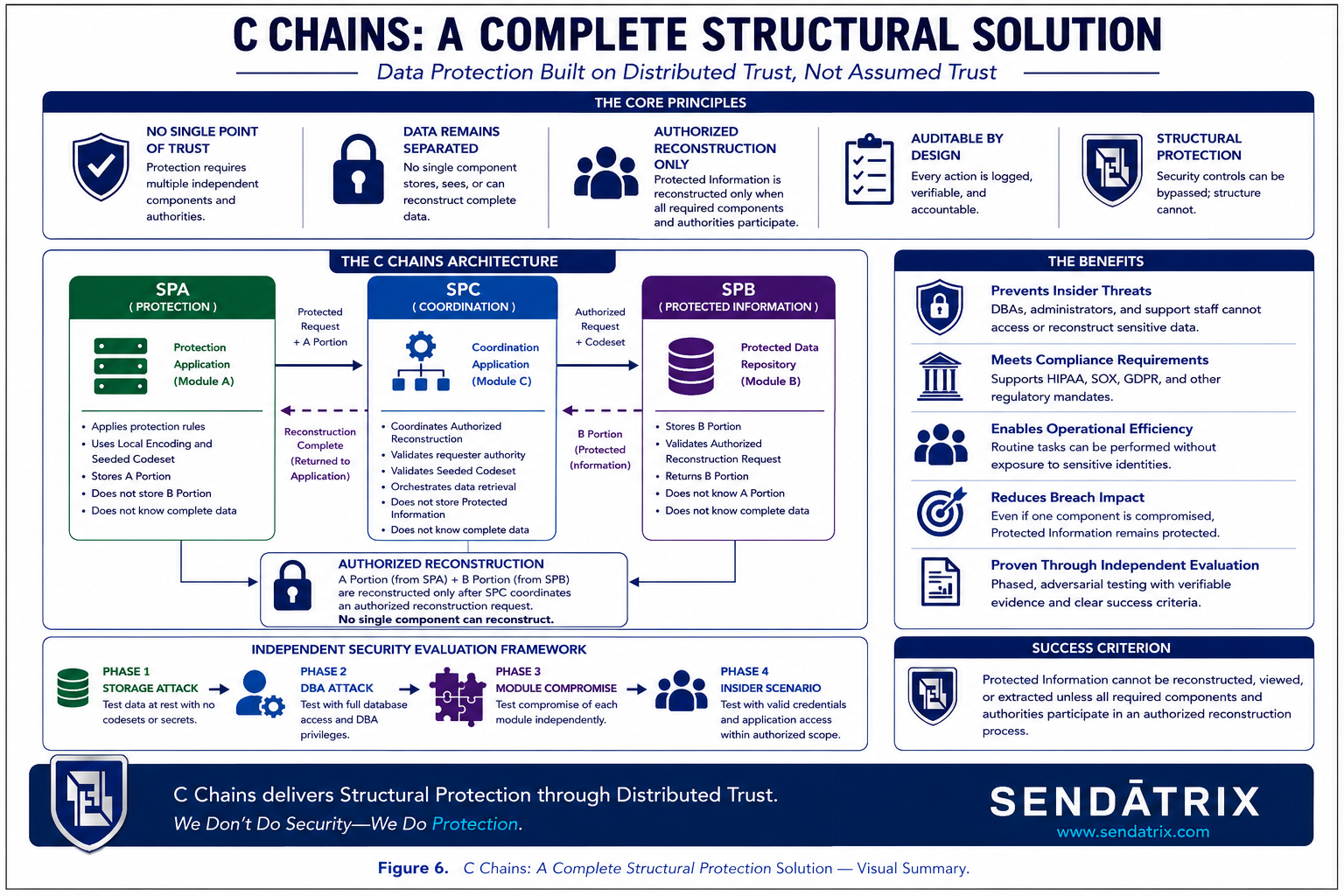
C Chains™ implements this principle through independently controlled protection, coordination, and protected-information components.
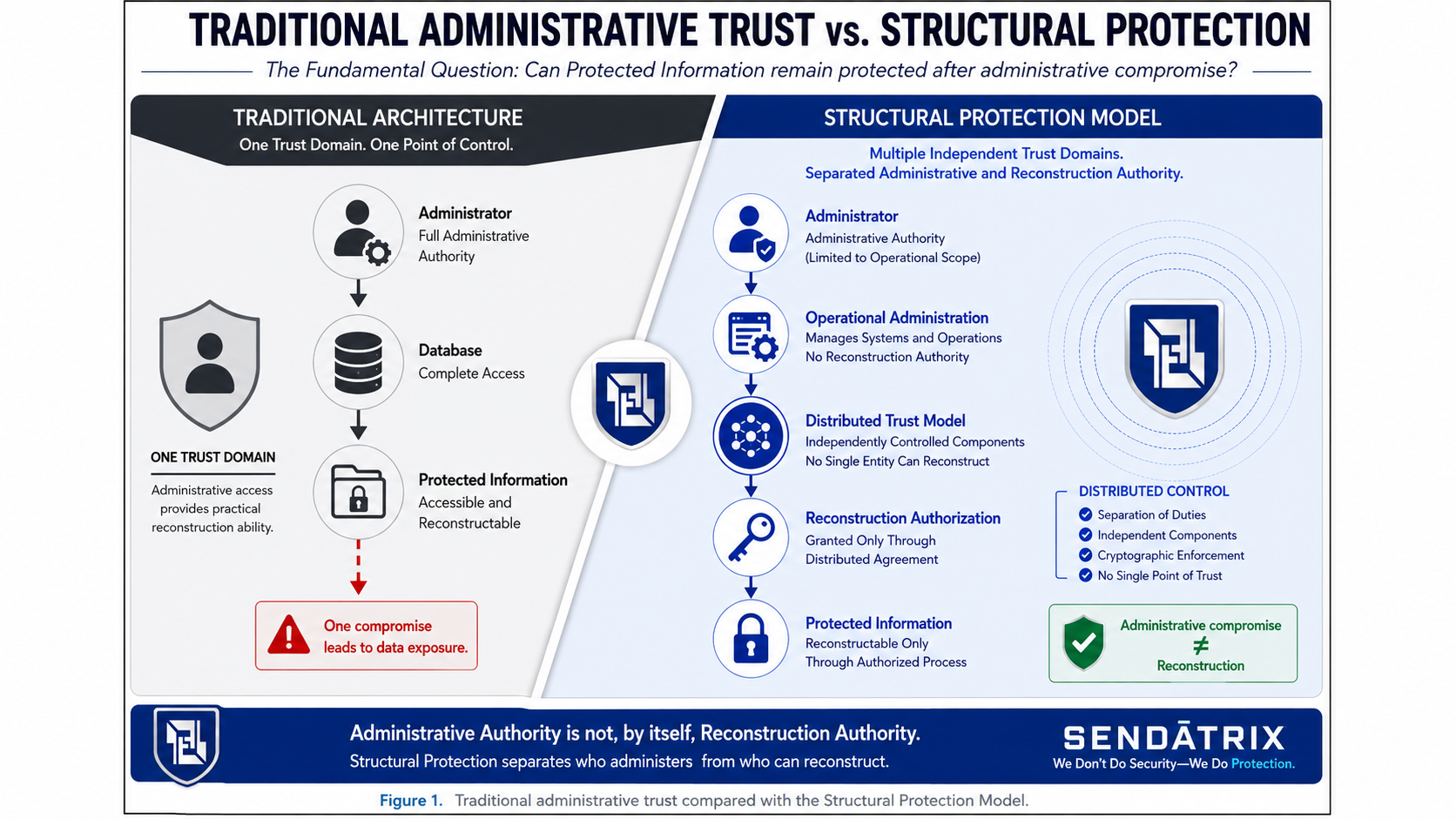
SDX-TP-002 establishes the architectural proposition, evaluator access, evidence requirements, success criteria, award conditions, and responsible-disclosure process.
Evaluating the Structural Protection Model: Official Evaluation Methodology, Award Conditions, and Evidence Requirements.
The evaluation is not a generic software certification. The defining question is whether Protected Information can be reconstructed outside the authorization model established by the Structural Protection Model.
Compromise of a server, database, privileged account, application, or individual component matters only if it enables Unauthorized Reconstruction.
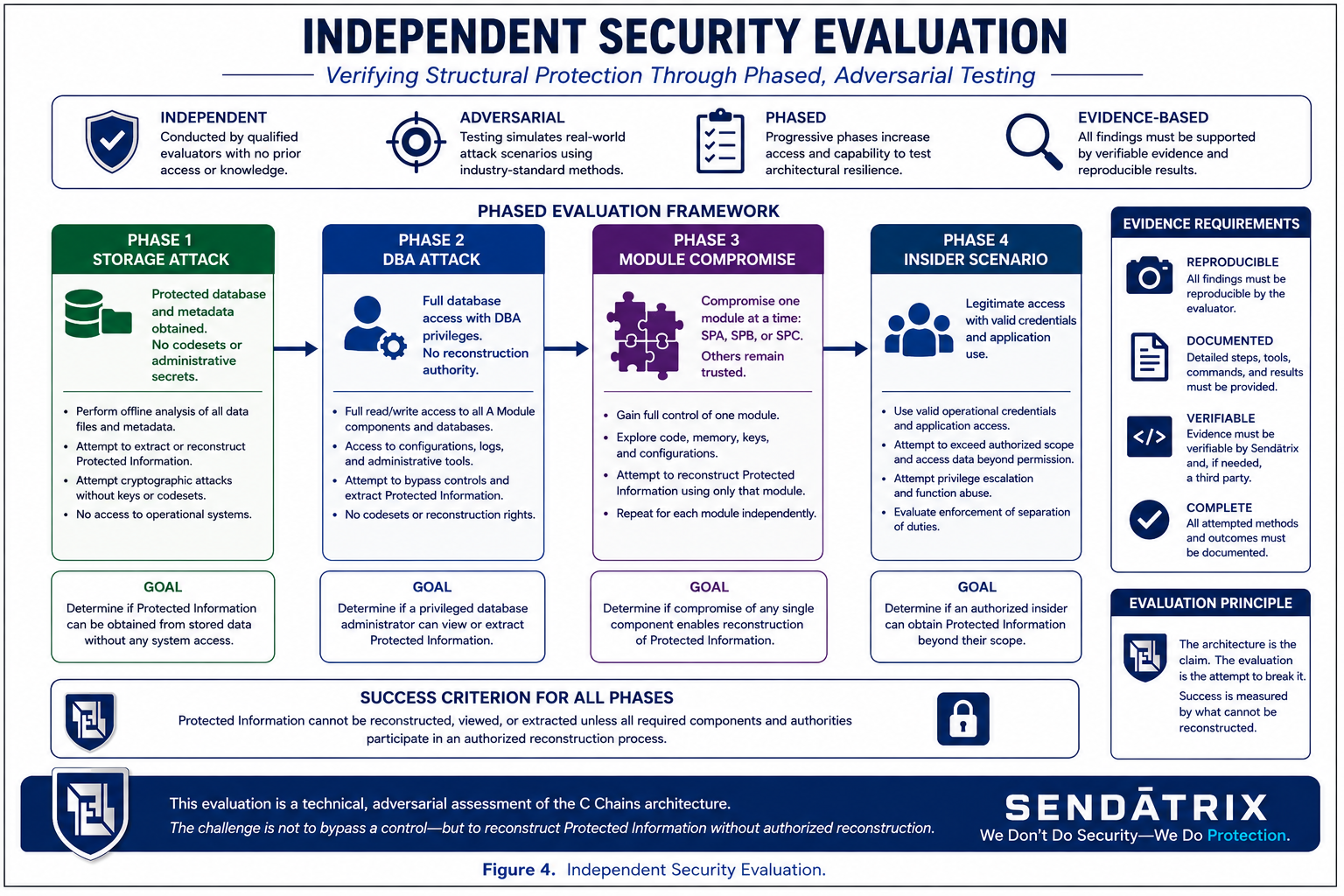
Evaluators may use architectural analysis, penetration testing, PostgreSQL forensics, reverse engineering, source review, memory analysis, backups, and multi-stage attack chains.
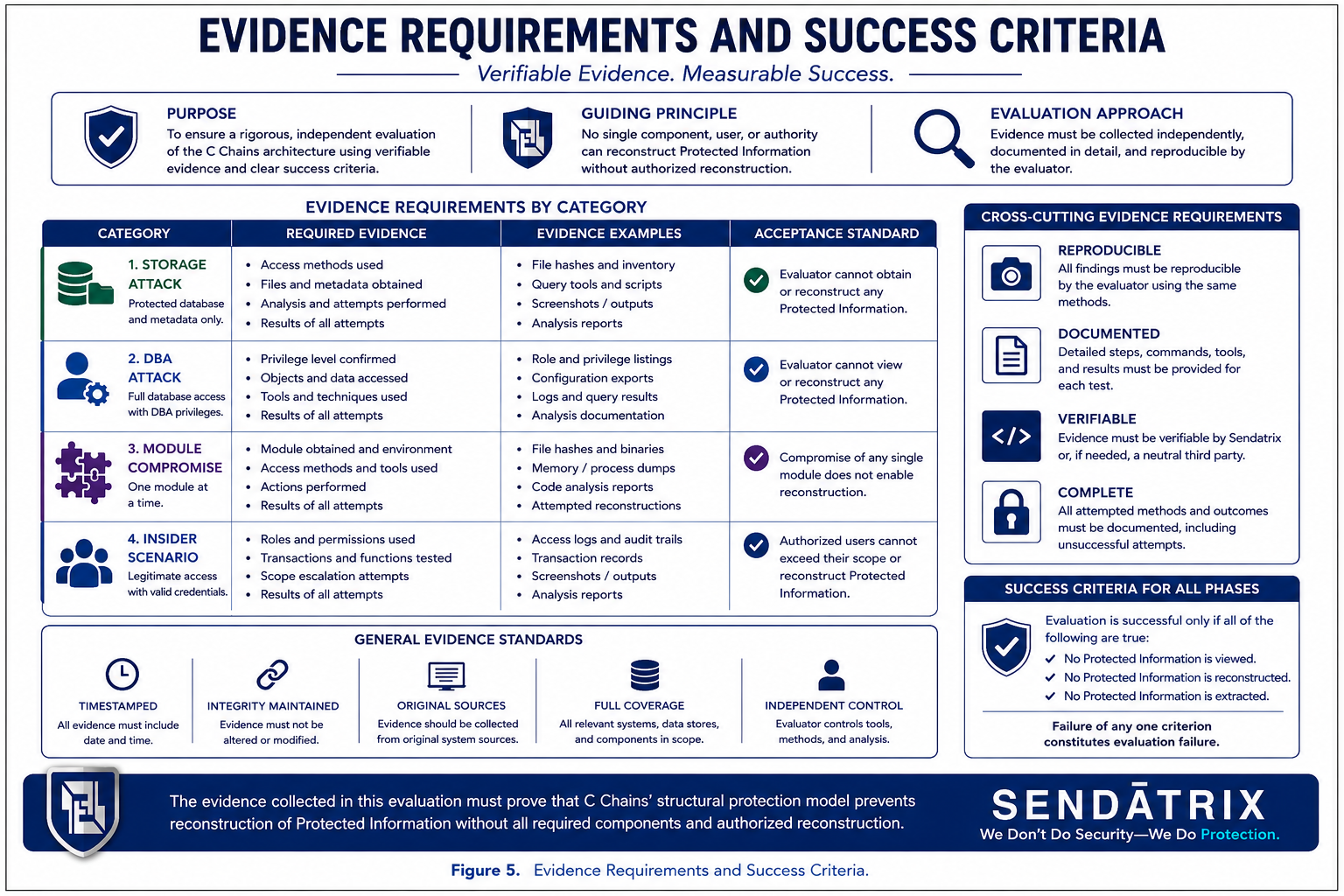
Findings must include sufficient technical detail, supporting artifacts, and repeatable steps for independent verification.
Each phase increases the evaluator's authority and visibility. The success criterion remains the same: demonstrate Unauthorized Reconstruction of Protected Information.
Examine protected database content and metadata without codesets, administrative secrets, or operational-system access.
Use full database and administrative privileges, including PostgreSQL artifacts, while lacking Reconstruction Authority.
Compromise SPA, SPB, or SPC independently and determine whether one component can reconstruct complete information.
Use valid credentials and legitimate application access while attempting to exceed the authorized operational scope.
A valid submission must demonstrate the methodology, preserve evidence integrity, support independent reproduction, and show that the reported outcome occurred under the published conditions.
SENDĀTRIX will award $5,000 USD when an evaluator demonstrates Unauthorized Reconstruction under the published conditions, provides sufficient evidence, and the result is independently verified.
Evaluators who believe they have demonstrated Unauthorized Reconstruction are requested to provide sufficient technical information to permit independent verification before public disclosure.
Verification ensures that findings are accurately understood, reproducible, fairly represented, and evaluated under the agreed conditions.
SENDĀTRIX is committed to acknowledging successful evaluators and incorporating valid findings into future implementation and publication revisions where appropriate.
Examine the implementation. Challenge its assumptions. Document the methodology. Let reproducible technical evidence determine whether the Structural Protection Model withstands scrutiny.